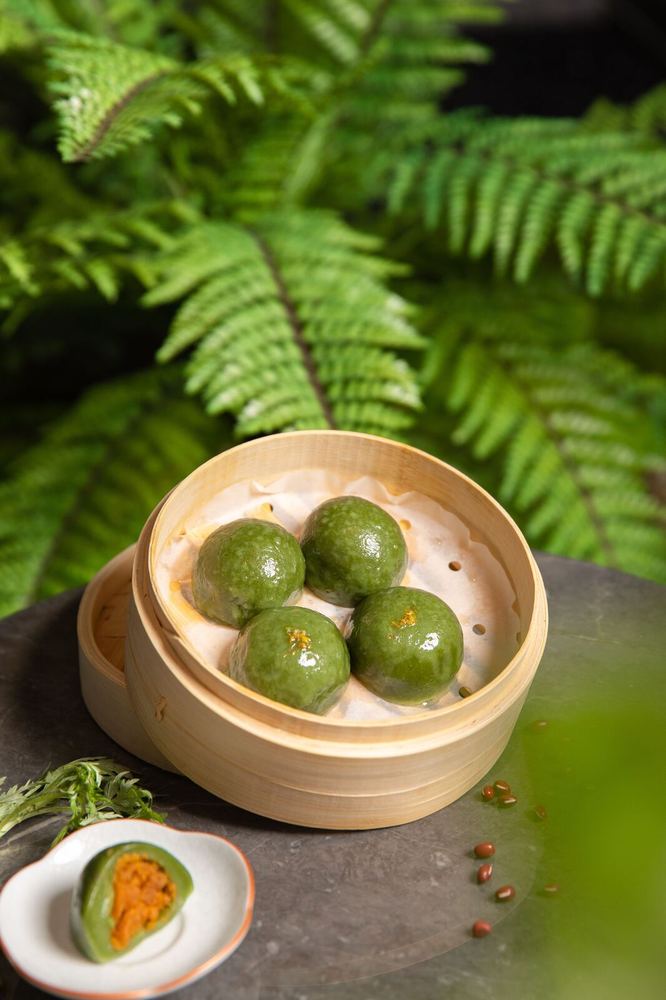
Matcha Mochi
MAH-chah MOH-chee — 'Matcha' means 'powdered tea' in Japanese; 'mochi' refers to pounded glutinous rice.
₹180
The most meditative dessert in the world — the tea ceremony's calm, distilled into something chewy.
Mochi dates back over a thousand years in Japan, originally tied to New Year and harvest rituals. Matcha's popularization came later, through Zen Buddhist monks who brought powdered tea practices from China and built the tea ceremony culture around it. The pairing of the two into a single sweet is a more modern convenience — nobody claims a specific inventor for it.
What makes it taste like that
The chewiness comes from glutinous rice flour steamed and pounded until the starches turn elastic — that texture is the whole appeal, more than any single flavor. Ceremonial-grade matcha brings a slightly bitter, grassy note meant to balance the sweetness of the filling, usually a smooth red bean or white bean paste.
Chef's note
Bite it in half first — whole, it's too easy to lose the filling in one overwhelming chew.